DIY Carpet Installation vs Hiring a Pro: Honest Comparison
DIY carpet installation can save $1–$2/sq ft in labor, but the tools, skill, and risk involved make it the wrong call for most homeowners.
Quick Answer
DIY carpet installation can save $1–$2/sq ft in labor, but the tools, skill, and risk involved make it the wrong call for most homeowners.
The Real Question Isn't Skill - It's Economics
DIY carpet installation appeals to people for one reason: labor costs money. A professional installer typically charges $1.00–$2.00/sq ft, and on a 600 sq ft project that's $600–$1,200 just for labor. Saving that sounds straightforward.
The math gets complicated fast once you factor in tool rental, potential material waste from measurement errors, and the cost of a redo if something goes wrong. Before you decide, run the full numbers using our carpet cost calculator to see what professional installation actually adds to your total.
Tools Required for DIY Carpet Installation
This is where most first-timers underestimate the project. Carpet installation requires specialized tools that aren't in the average homeowner's garage:
- Power stretcher: The most important tool. Stretches carpet tightly across the room so it doesn't bubble or ripple later. Rental: $30–$60/day.
- Knee kicker: Used near walls and in tight spaces. Can be purchased for $25–$50.
- Seaming iron and seam tape: Required any time two carpet pieces join. Rental or purchase: $20–$40.
- Tack strip nailer or hammer: Tack strips secure around the perimeter. Strips cost $15–$30 for a room.
- Carpet knife and straight edge: For clean cuts.
- Stair tool: For tucking carpet into seams at walls and stairs.
Total tool rental for a weekend project typically runs $80–$150. If you plan to do multiple rooms or multiple projects over time, buying makes sense. For one room, rental is the better call.
Cost Comparison: DIY vs. Professional
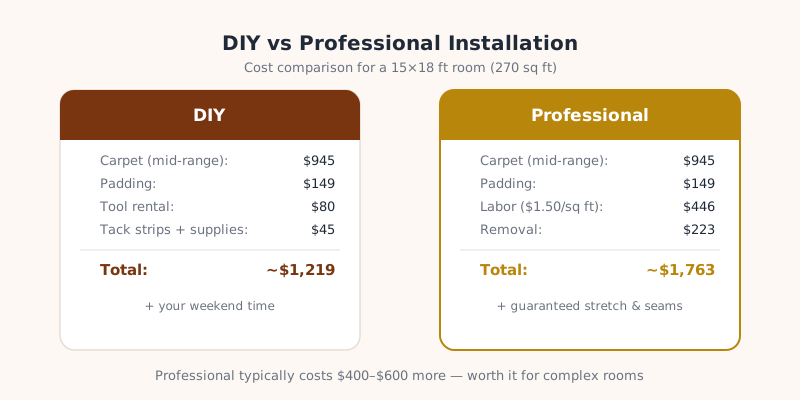
Here's a worked example for a 15 × 20 ft living room (300 sq ft):
DIY installation:
- Carpet material at $3.00/sq ft: $900
- Padding at $0.60/sq ft: $180
- Tack strips + supplies: $40
- Tool rental: $120
- Total: $1,240
Professional installation:
- Carpet material at $3.00/sq ft: $900
- Padding at $0.60/sq ft: $180
- Labor at $1.50/sq ft: $450
- Total: $1,530
The DIY saving here is about $290 - assuming no mistakes. A single botched seam that requires a professional fix can eat most of that. Use our carpet cost estimator to build your own scenario with different labor and material rates.
When DIY Makes Sense
DIY carpet installation is genuinely viable in specific situations:
Simple, rectangular rooms. One piece of carpet, no seams, minimal cuts. This is where a first-timer can succeed without professional-level skill.
Replacing like-for-like in a rental or low-stakes space. If you're re-carpeting a basement or rental bedroom and the stakes for perfection are low, DIY is reasonable.
You have done it before. The learning curve is steep the first time. If you've installed carpet in two or three rooms, you likely have the technique for power stretching and seam work.
The room is under 200 sq ft. Small rooms have less margin for compounding errors and the tool rental cost is more justifiable per square foot.
When to Hire a Professional
Most homeowners should hire a pro for these situations:
Stairs. Carpet on stairs requires precise cuts, consistent tuck depth, and either a waterfall or Hollywood installation method. Mistakes are visible from every angle and dangerous if the carpet shifts.
Rooms with multiple seams. Seams that aren't heat-bonded and laid correctly separate within a year. Poor seam work is among the hardest mistakes to fix after the fact - and the most visible.
Expensive carpet. If you're spending $5–$8/sq ft on premium nylon, a $1.50/sq ft professional installation is cheap insurance. A poorly stretched carpet voids most manufacturer warranties.
Pattern-matched carpet. Geometric or repeating patterns require precise alignment across seams. This is advanced work even for experienced DIYers.
Common DIY Failures and Why They Happen
Rippling and buckling. Almost always caused by under-stretching with a knee kicker instead of a power stretcher. The knee kicker alone can't achieve the tension needed across a full room. The carpet looks fine initially, then buckles within 6–12 months as it relaxes.
Visible or separating seams. Seam tape requires the right temperature seaming iron and proper technique. Cold seams or improperly overlapped edges separate and become a trip hazard.
Carpet pulling away from walls. Tack strips installed too far from the wall (should be 1/4 to 3/8 inch from the baseboard) don't grip properly. The carpet releases within months.
Uneven transitions. Where carpet meets hard flooring, a proper metal transition strip needs to be set at the right height. A proud transition edge is a stubbed-toe waiting to happen.
Skill Level Assessment
Be honest about where you land:
- No experience, one room: Hire a professional or do significant research before attempting.
- Basic home improvement skills, simple rectangular room: DIY is viable with proper tool rental and a tutorial.
- Experienced DIYer who has done it before: DIY is a reasonable choice for most rooms.
- Multiple rooms, stairs, or expensive material: Hire a professional regardless of skill level.
Our team covers the full cost picture on the about page. For the complete cost breakdown before you budget either approach, see our carpet cost breakdown guide. And if you're going the DIY route, review how to measure a room for carpet before ordering material - measurement errors are the single most expensive DIY mistake.