Which Carpet Grade Is Right for Your Home?
Carpet grade affects cost, durability, and feel underfoot. Learn what each tier means and which one fits your room.
Quick Answer
Carpet grade affects cost, durability, and feel underfoot. Learn what each tier means and which one fits your room.
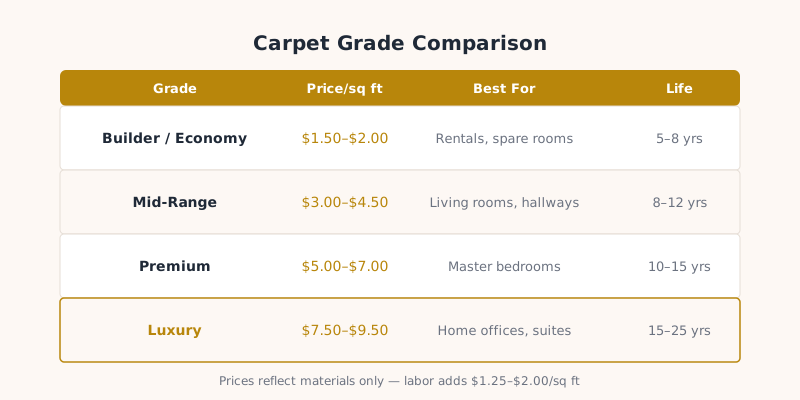
The Four Carpet Grades (and What They Actually Mean)
"Grade" gets used loosely in flooring showrooms. Several specifications fall under the label - fiber type, face weight, pile style, and density - all of which determine how long the carpet holds up and how it feels underfoot.
Here's what each tier looks like in practice.
Builder Grade: $0.79–$1.50/sq ft
Builder-grade carpet is what you find in new construction homes, rental properties, and flip projects. It's thin (typically 20–28 oz face weight), has a low pile, and is designed to meet a price point rather than a performance standard.
Face weight - measured in ounces per square yard - is the single most useful number when comparing carpets. Builder grade starts at the low end. The fibers compress quickly, traffic lanes show within 12–18 months, and replacement cycles are short (5–8 years under normal use).
It's not useless - in a guest bedroom that sees traffic twice a year, it works fine. In a family room with kids and pets, it's a money-losing choice.
Mid-Range Grade: $1.50–$3.50/sq ft
Mid-range carpet is the most commonly installed grade in owner-occupied homes. Face weight typically runs 28–40 oz, offering noticeably better resiliency than builder grade. Most mid-range carpets use solution-dyed nylon or polyester, giving reasonable stain resistance and color retention.
Pile styles at this tier include:
- Cut pile (saxony/plush): Soft, uniform appearance. Best for low-to-moderate traffic rooms.
- Frieze: Twisted fibers that hide footprints and vacuum marks. Good for family rooms.
- Cut-and-loop: Mix of cut and looped fibers creates texture. Hides wear patterns well.
At $2.50/sq ft installed, a 12 × 15 ft bedroom (180 sq ft) runs around $450 for material - plus $1.00–$1.50/sq ft for installation and padding.
Use our carpet cost calculator to run the full numbers for your specific room dimensions and grade.
Premium Grade: $3.50–$6.00/sq ft
Premium carpet starts at 40 oz face weight and typically uses type 6,6 nylon - the most durable widely available carpet fiber. It recovers better from compression, holds its texture longer under foot traffic, and resists staining more effectively than polyester at the same price point.
Pile styles at this tier include all mid-range options, plus:
- Berber (loop pile): Dense, flat loops made famous in commercial settings. Extremely durable if the loops are tight and the fiber is nylon, not olefin.
- Plush/velvet: High-cut pile, very soft. Best for formal spaces with light traffic.
A 500 sq ft living room in premium grade can run $2,500–$4,000 for material and installation. It's a significant step up, but the replacement timeline stretches to 15–20 years with proper care.
Luxury Grade: $6.00–$15.00+/sq ft
Luxury carpet is a different category - wool, wool blends, or ultra-high face weight nylon (60+ oz). Wool is naturally soil-resistant, temperature-regulating, and aesthetically distinctive. It's also expensive and requires professional cleaning to maintain.
At $10/sq ft for a 300 sq ft master bedroom, material alone is $3,000. These products are sold for specific use cases: formal rooms, high-end renovations, and homeowners who prioritize longevity and tactile quality over initial cost savings.
Wool carpet, properly maintained, can last 25–30 years. Learn more about fiber types in our nylon vs. polyester carpet comparison.
Room-by-Room Recommendations
Bedrooms: Mid-range or premium saxony/plush. Traffic is light; comfort matters more than durability.
Living rooms and family rooms: Mid-range frieze or cut-and-loop. The texture disguises wear patterns. Minimum 32 oz face weight.
Hallways and stairs: Premium or commercial Berber. Low pile, tight construction. Builder grade will show a worn path within two years.
Basements: Moisture-resistant mid-range polyester or olefin. Avoid anything with natural fibers - humidity affects performance.
Home offices: Mid-range cut-and-loop or commercial Berber. If you use a rolling chair, low pile is essential.
A Worked Calculation Example
Say you're installing carpet in a 20 × 25 ft living room (500 sq ft) and comparing mid-range vs. premium:
- Mid-range at $2.50/sq ft: $1,250 material + $0.75/sq ft padding ($375) + $1.25/sq ft labor ($625) = $2,250 total
- Premium at $5.00/sq ft: $2,500 material + $0.75/sq ft padding ($375) + $1.25/sq ft labor ($625) = $3,500 total
The $1,250 gap is real. The question is whether the extra 7–10 years of lifespan on the premium carpet is worth it given how long you plan to stay in the home.
Run your own numbers with our carpet cost calculator before making the decision.
Understanding Face Weight vs. Density
Face weight alone doesn't tell the whole story. Density - how tightly the fibers are packed together - matters equally. A 40 oz carpet with loose fiber spacing will underperform a 35 oz carpet with tight construction.
The density rating formula is: (face weight × 36) / pile height. A density above 3,000 is considered good for residential use; above 5,000 is excellent.
Most retailers don't display density ratings prominently. A quick test: if the backing shows through easily when you bend a carpet sample, the density is low.
Our team explains more about how carpet specs affect long-term costs on the about page. For a breakdown of what you're actually paying for at each tier, see our carpet cost breakdown guide.