Nylon vs Polyester Carpet: Which Is Better for Your Home?
Nylon costs $2–$5/sq ft and lasts 15–25 years. Polyester runs $1–$3/sq ft but fades faster. Here's how to pick the right fiber for each room.
Quick Answer
Nylon costs $2–$5/sq ft and lasts 15–25 years. Polyester runs $1–$3/sq ft but fades faster. Here's how to pick the right fiber for each room.
The Short Answer
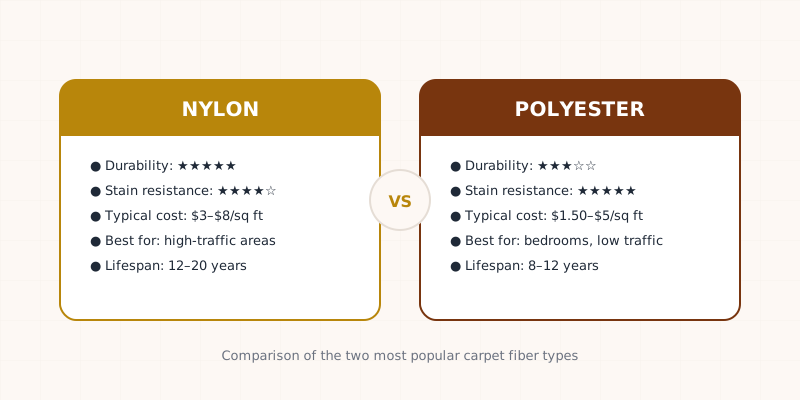
Nylon is the better carpet fiber for high-traffic areas and households with kids or pets. Price is the main trade-off: nylon runs $2–$5/sq ft for material, polyester $1–$3/sq ft - and the durability gap is just as wide.
Before you decide, estimate your carpet costs with both fiber types to see how the price difference plays out across your actual square footage.
Nylon: The Durable Default
Nylon has been the dominant residential carpet fiber for decades, and for good reason. It's elastic, meaning it springs back after compression - which is why it holds up in hallways, living rooms, and stairs where foot traffic is constant.
Key nylon specs:
- Face weight typically 30–60 oz (higher = denser pile)
- Lifespan: 15–25 years with proper care
- Stain resistance: Good when solution-dyed or treated with a stain coating (Scotchgard, etc.)
- Fade resistance: Excellent - nylon holds dye well
- Cost: $2–$5/sq ft material only; $4–$8/sq ft installed
One caveat: nylon is not inherently stain-resistant. If it's not solution-dyed or treated with a topical coating, it can absorb stains quickly - always ask the retailer which treatment is applied.
Polyester: The Budget-Friendly Alternative
Polyester (also sold as PET carpet, made partly from recycled plastic bottles) is softer to the touch and inherently more stain-resistant than untreated nylon. It also costs less.
Key polyester specs:
- Face weight typically 20–50 oz
- Lifespan: 10–15 years in low-traffic areas; shorter with heavy use
- Stain resistance: Excellent - polyester doesn't absorb water-based stains
- Fade resistance: Lower - UV exposure can dull colors faster
- Cost: $1–$3/sq ft material only; $3–$6/sq ft installed
The weak point of polyester is oil-based stains. Butter, grease, and similar substances bind to the fiber and are extremely hard to remove. If your household cooks a lot or has pets that track in oils, nylon is the safer bet.
Triexta: The Honorable Mention
Triexta (Mohawk's SmartStrand is the most recognized brand) is a newer fiber that sits between nylon and polyester in performance and price. It's partially derived from corn sugar, making it a partially bio-based option.
Triexta costs $2–$4/sq ft for material and carries built-in stain resistance - meaning the resistance is part of the fiber itself, not a topical coating that wears off. It performs well in medium-traffic areas and comes with strong manufacturer warranties (Mohawk offers lifetime stain warranties on some lines).
It's not quite as resilient as nylon under heavy traffic, but it outperforms standard polyester in durability. Worth considering if you want something eco-friendlier without sacrificing too much performance.
Head-to-Head: Room-by-Room Recommendations
Living room and family room
Go with nylon. These are your highest-traffic spaces and where carpet takes the most compression and foot abuse. A 35–40 oz face weight nylon in a textured or frieze style will hold up for 15+ years.
Master bedroom
Either fiber works. If you go with nylon in a low-traffic bedroom, you may be paying for durability you don't need.
Kids' bedrooms
Nylon, specifically solution-dyed nylon. Kids create messes that involve both water-based (juice, paint) and oil-based (food) stains. Solution-dyed nylon handles both better than polyester.
Stairs
Nylon only. Stairs see concentrated wear patterns on the nose of each step. Polyester will flatten and show wear in 5–8 years on a busy staircase. For stairs, look for nylon with at least 40 oz face weight and a low-pile or cut-pile construction.
Basement
Polyester, specifically if moisture is any concern. Polyester doesn't absorb moisture as readily as nylon and resists mold better in damp conditions. Alternatively, consider a moisture-resistant pad designed for below-grade installations.
Home office (low traffic)
Polyester is fine. If you're the only one using the space and it doesn't involve heavy rolling chair traffic, the cost savings are real and the durability trade-off is minimal.
Worked Example: 3-Bedroom House
Say you're carpeting three bedrooms (master: 200 sq ft, two kids' rooms: 150 sq ft each) plus a living room (250 sq ft). Total: 750 sq ft.
With mid-range polyester at $2/sq ft + pad + labor ≈ $4.50/sq ft installed:
- 750 sq ft × $4.50 = $3,375 total
With mid-range nylon at $3.50/sq ft + pad + labor ≈ $6/sq ft installed:
- 750 sq ft × $6 = $4,500 total
The difference is $1,125. Over a 15-year lifespan for nylon vs 10 years for polyester in high-traffic areas, you'd likely spend more on replacement carpet by going polyester. But if you're planning to sell the house in 5 years, polyester may be the smarter financial call.
Use our carpet installation cost estimator to model both scenarios with your actual dimensions.
What About Wool?
Wool is the premium natural option - luxurious feel, excellent durability, naturally flame-resistant - but it costs $8–$20/sq ft for material alone, requires professional cleaning, and is sensitive to moisture and certain cleaning chemicals. It's a specialty choice for specific applications, not a practical option for most residential projects.
The Decision Framework
Ask yourself three questions:
- How long do you plan to stay in the home? More than 10 years - invest in nylon. Less than 5 - polyester is fine.
- Do you have kids, pets, or frequent guests? Yes - nylon, ideally solution-dyed.
- Is this a low-traffic bedroom? Yes - polyester saves real money with minimal downside.
At Carpet Cost Calculator, our goal is to help homeowners make informed decisions, not push the most expensive option. Sometimes polyester is the right answer.
For a full pricing picture, see our carpet cost breakdown guide. And once you've picked your fiber, our carpet care tips will help you get the full lifespan out of whatever you choose.