7 Carpet Installation Mistakes That Cost Homeowners Money
Avoid these 7 carpet installation mistakes that lead to premature wear, voided warranties, and hundreds in wasted spending.
Quick Answer
Avoid these 7 carpet installation mistakes that lead to premature wear, voided warranties, and hundreds in wasted spending.
Why Installation Errors Are So Expensive
A bad carpet installation doesn't announce itself on day one. Instead, the problems compound: premature wear, rippling, voided warranties, and early replacement costs that far exceed what better choices upfront would have cost.
These seven mistakes are the ones professional installers see most often. Each one is avoidable.
Mistake 1: Skipping Padding Quality
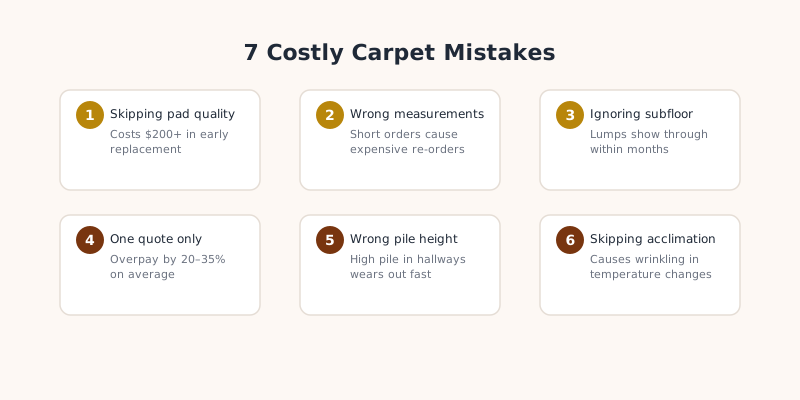
The carpet gets all the attention, but the padding underneath determines how long it actually lasts. Thin, low-density padding (under 6 lb density) compresses quickly in high-traffic areas, leaving the carpet backing unsupported. Once the backing breaks down, no amount of cleaning saves it.
A quality 8 lb rebond pad costs around $0.50–$0.80/sq ft more than bargain options. Replacing the carpet years early is a far more expensive trade-off than spending more on pad upfront.
Read more about padding selection in our carpet padding guide.
Mistake 2: Measuring Incorrectly
Carpet is sold by the square yard, cut in standard 12-foot (and sometimes 15-foot) widths. Measuring only length × width and dividing by 9 ignores seam placement, pattern repeats, and roll direction. The result is either running short mid-installation or wasting expensive yardage.
A room that's 14 × 16 feet (224 sq ft) still requires a 15 × 16 ft cut from a 15-ft roll - that's 240 sq ft of material. Use our carpet installation cost estimator to account for waste before buying.
Irregular rooms, closets, and hallways each need to be measured separately and added to the total. See our guide on how to measure a room for carpet for a step-by-step walkthrough.
Mistake 3: Choosing the Wrong Pile for Traffic Level
A plush, high-pile carpet looks luxurious in the showroom. In a family room or hallway, it mats down within a year. Loop pile (Berber) and low-cut pile (commercial-grade) hold their shape under foot traffic because the fibers don't have as much vertical height to collapse.
Traffic level tiers to keep in mind:
- Light traffic (guest rooms, master bedrooms): plush, saxony, or high-pile work fine
- Moderate traffic (living rooms, dining areas): frieze or cut-and-loop
- Heavy traffic (stairs, hallways, family rooms): tight loop, low-cut pile, or commercial Berber
Choosing based on looks alone - without considering traffic - is one of the fastest routes to an early replacement.
Mistake 4: Ignoring Subfloor Preparation
Carpet can hide a multitude of sins visually. It cannot hide them structurally. Squeaky subfloors, high spots, soft spots, and old adhesive residue all show through over time, and they accelerate wear on the carpet from below.
Before any carpet goes down, the subfloor should be swept, dried, and inspected. Loose subfloor panels need re-screwing (not gluing). Squeaks require screws every 6–8 inches along the joists. High spots over 3/16 inch need sanding or grinding.
Proper subfloor prep adds $1–$3/sq ft to a project. Skipping it risks structural damage to the new carpet within the first year.
Mistake 5: Not Getting Multiple Quotes
The range between carpet installation bids is wider than most homeowners expect. Labor alone can run $0.50–$2.00/sq ft depending on the market, the installer, and what's included. Some quotes bundle carpet removal and disposal; others don't. Some include furniture moving; most don't.
Getting at least three quotes lets you spot outliers in both directions - the unusually low bid that cuts corners and the inflated quote banking on you not knowing better. Use our carpet cost calculator to establish a baseline before any installer walks through the door.
Mistake 6: Wrong Removal Timing
Scheduling carpet installation without planning for old carpet removal creates problems. Some homeowners plan to remove the old carpet themselves, which is fine - but then run out of time and delay installation.
Adhesive-backed carpet over concrete adds complexity. Old padding that's glued down requires scraping before new tack strips can go in. If the removal happens the same day as installation, surprises get expensive fast. Plan and budget removal separately.
Mistake 7: Ignoring Manufacturer Warranty Specs
Most carpet warranties require professional installation, specific padding types, and professional cleaning every 12–18 months. Installing over a padding that doesn't meet spec, or having a neighbor install it as a favor, can void the warranty entirely.
Before purchase, read the warranty document - not the marketing summary. Note the padding density requirement, the installation method specified (stretch-in vs. glue-down), and the cleaning requirements. Then make sure your installer agrees in writing to meet those specs.
A voided warranty on a $3,000 carpet means the manufacturer owes you nothing when a manufacturing defect shows up in year two.
---
Before any of these steps, knowing your total budget is essential. Use our carpet cost calculator to build your baseline, then verify it against installer quotes. The team behind this calculator explains how costs are calculated on our about page.