How to Make Your Carpet Last: Care and Maintenance Guide
Proper carpet care can extend replacement timelines by 5–10 years. Learn vacuuming schedules, stain treatment, and when deep cleaning beats replacement.
Quick Answer
Proper carpet care can extend replacement timelines by 5–10 years. Learn vacuuming schedules, stain treatment, and when deep cleaning beats replacement.
The Cost of Neglecting Carpet Maintenance
A mid-range carpet installation runs $3–$6/sq ft installed. On a 1,200 sq ft home, that's a $3,600–$7,200 gap between a carpet that lasts 8 years and one that lasts 14 - the difference of one full replacement cycle.
That math makes a vacuuming schedule and a $300 professional cleaning every 18 months look very inexpensive by comparison. Before you're in a position to replace, use our carpet cost calculator to understand what the next replacement would actually cost. It tends to refocus priorities on maintenance.
Vacuuming: Frequency and Technique
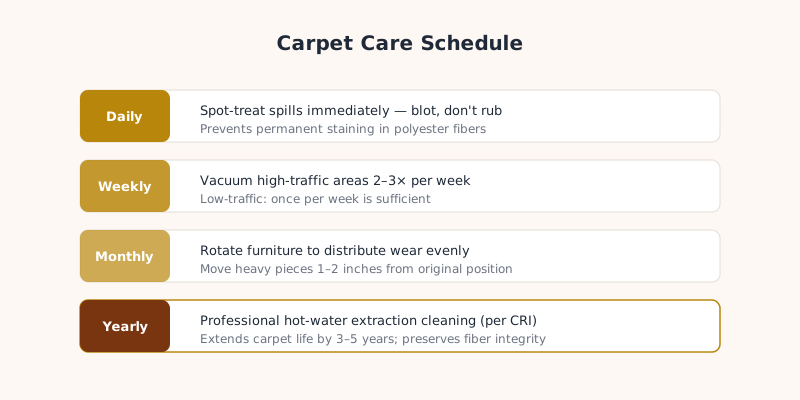
Vacuuming is the single most impactful thing you can do for carpet longevity. Soil particles are abrasive. Left in the pile, they act like sandpaper on the fibers with every footfall. The Carpet and Rug Institute (CRI) recommends vacuuming frequency based on traffic level:
- Light traffic (guest bedrooms, formal rooms): once per week
- Moderate traffic (living rooms, home offices): 2–3 times per week
- Heavy traffic (family rooms, hallways): daily or every other day
- Homes with pets: daily in pet areas, regardless of traffic level
Technique matters as much as frequency. Vacuum slowly - one pass per second - to give the suction time to pull debris from the pile base. Overlap passes by 50%. Change direction on alternate cleanings to lift fibers that have been pushed in one direction.
Beater-bar vacuums work better than suction-only models for cut pile carpet. For loop-pile carpet (Berber), skip the beater bar - it can snag loops and cause runs.
Professional Cleaning Schedule
The CRI recommends professional hot-water extraction (steam cleaning) every 12–18 months for residential carpet. Microscopic soil buildup below the surface of the pile causes fiber degradation that vacuuming cannot prevent.
What professional cleaning actually does: high-temperature water is injected into the pile under pressure and immediately extracted, pulling out oils, deeply embedded soil, and allergens. A truck-mounted system is significantly more effective than portable rental machines, which lack the water temperature and extraction power to fully remove residue.
Budget $120–$300 for a whole-home professional cleaning, depending on square footage and region. That's often far less than one carpet replacement.
Stain Treatment by Stain Type
Acting within the first 10 minutes dramatically improves outcomes for most stains. The basic principle: blot, don't scrub. Scrubbing spreads the stain and forces it deeper into the pile.
Liquid spills (coffee, juice, wine):
Blot excess immediately with a clean white cloth. Apply cold water, blot again. For wine and coffee, a solution of 1 tablespoon dish soap + 1 tablespoon white vinegar + 2 cups warm water works on most fibers. Blot, don't pour. Rinse with cold water and blot dry.
Grease and oil:
Sprinkle baking soda or cornstarch on the spot, let sit for 15 minutes to absorb oil, then vacuum. Apply a small amount of dry-cleaning solvent or dish soap solution and blot. Rinse lightly and blot dry.
Pet urine:
Blot immediately. Use an enzyme cleaner - avoid ammonia-based products, since ammonia smells similar to urine and encourages repeat marking.
Mud:
Let it dry completely before doing anything. Dried mud vacuums out; wet mud smears and sets. Once dry, vacuum thoroughly, then treat remaining residue with dish soap solution.
Red dye stains (Kool-Aid, fruit punch):
This is the hardest category. A red dye bonds to nylon within minutes and becomes very difficult to remove after 30 minutes.
What not to do: avoid hot water (sets many stains), bleach on colored carpet, and excessive moisture. Over-wetting the carpet saturates the backing and padding, leading to mold and odor issues.
Furniture Indentations
Heavy furniture compresses carpet pile over time, leaving visible dents. The fibers are deformed but not broken.
Prevention: Use furniture coasters or cups under legs to distribute weight across a wider area. These cost $5–$15 for a set and prevent the problem entirely.
Reversal: Place a damp cloth over the indentation and apply a warm iron briefly - the steam relaxes the fibers. Alternatively, fill the dent with ice cubes, let them melt, and blot dry. The fibers absorb moisture and spring back as they dry. Use a coin to gently lift the pile once it's damp.
Neither method works instantly - give the fibers 24–48 hours after treatment to return to their natural height.
When to Replace vs. Deep Clean
This is the question that most homeowners get wrong in one direction or the other - either replacing too soon (because the carpet looks dull but still has years of structural life) or waiting too long (continuing to clean carpet that's past recovery).
Signs deep cleaning can help:
- Dull appearance or embedded soil that vacuuming doesn't remove
- Mild odors (pet, general mustiness)
- Stains that weren't treated immediately
- Matted pile in traffic areas on carpet under 8 years old
Signs it's time to replace:
- Visible worn paths where the pile backing shows through (fiber loss, not soil)
- Persistent odors after professional cleaning (especially pet urine - once it saturates the padding and subfloor, no surface treatment fixes it)
- Rippling, bubbling, or delamination of the backing
- Allergic reactions that persist despite regular cleaning - old carpet accumulates allergen loads that cleaning doesn't fully resolve
- Carpet over 10–15 years old that has received normal to heavy traffic
If you're on the fence, get a professional cleaning first and evaluate after it dries. A quality cleaner can honestly tell you whether another year of life is realistic or if you're spending $200 to delay the inevitable.
How Maintenance Affects Replacement Cost
The math is simple but worth stating explicitly. A properly maintained carpet lasts 12–15 years. A neglected carpet in the same traffic conditions lasts 7–10 years. On a 1,200 sq ft installation at $4/sq ft:
- Replacement every 8 years over 24 years: 3 replacements × $4,800 = $14,400
- Replacement every 14 years over 28 years: 2 replacements × $4,800 = $9,600
The $4,800 difference more than covers two decades of professional cleaning. Run your own replacement scenario with our carpet cost calculator to see what the next installation would cost in your area.
Learn more about which carpet fiber types respond best to long-term maintenance in our nylon vs. polyester carpet comparison. If you're considering an upgrade, our carpet grade guide shows how face weight and construction affect long-term wear. The team behind this calculator explains our methodology on the about page.