Carpet for Stairs: Types, Costs, and Installation Tips
Carpeting stairs costs $15–$25 per step installed. Learn which carpet types hold up, which installation method to use, and what to watch out for.
Quick Answer
Carpeting stairs costs $15–$25 per step installed. Learn which carpet types hold up, which installation method to use, and what to watch out for.
Why Stairs Are the Hardest Place to Get Carpet Right
Stairs take more abuse per square foot than any other surface in a home. Every step concentrates foot traffic on a narrow horizontal tread and a vertical riser, both of which flex slightly with each footfall. Carpet that works in a living room can look worn out on stairs within two years.
Getting stair carpet right starts with choosing the correct material and installation method - before you think about color or pattern.
Best Carpet Types for Stairs
Not all carpet is appropriate for stair use. High-pile and plush styles compress unevenly under the constant pressure of step edges, creating a rippled or scalloped look within months.
Low-pile cut carpet (under 3/4 inch pile height): The most practical choice for most homes. Easy to clean, holds shape well, doesn't snag on shoes or vacuum wheels. Face weight of 35–45 oz is the right range.
Tight loop pile (Berber): Extremely durable if the loops are nylon, not olefin. Nylon Berber at 32–40 oz handles stair edge pressure well. Caution: if a loop snags and pulls, it can unravel a visible run. Keep it away from homes with cats.
Commercial-grade carpet: Designed for the kind of constant traffic that stairs see. Typically low-cut or dense loop in the 28–35 oz range. Not glamorous, but it lasts.
What to avoid: Frieze, saxony, plush, or any cut pile over 3/4 inch. These pile styles bend and mat at the stair nosing (the front edge of each tread), creating a permanently worn crease.
Waterfall vs. Hollywood Installation
There are two main methods for installing carpet on stairs. The choice affects both appearance and how the carpet wears.
Waterfall installation runs the carpet straight down over the nosing without wrapping tightly around it. The carpet "falls" from tread to riser in a smooth, continuous line. It's faster to install and the most common method. The downside: carpet on the nosing sits looser and is subject to more wear at that edge.
Hollywood (cap-and-band) installation wraps the carpet tightly around the nosing and is individually secured at the tread-riser junction on each step. Each step needs to be cut and fitted rather than rolled continuously - which increases both labor time and material cost.
For standard residential stairs with a continuous run, waterfall is the default. Hollywood installation makes sense when appearance matters significantly or when stairs have unusual angles and shapes.
Cost Per Step
Stair carpet is almost always priced per step rather than per square foot because the cutting, fitting, and securing is labor-intensive compared to open floor areas.
Typical installed cost ranges:
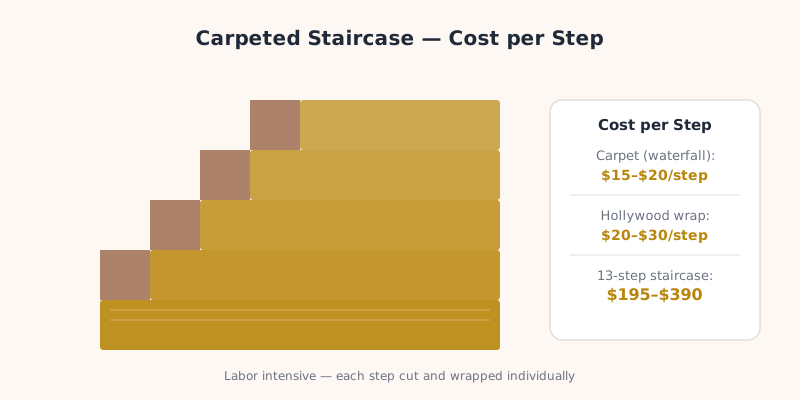
- Waterfall installation: $12–$20 per step
- Hollywood installation: $18–$30 per step
- Runner only (leaving hardwood sides exposed): $10–$18 per step
A standard staircase of 13 steps runs approximately $160–$260 for waterfall installation and $235–$390 for Hollywood. Add $1–$2/step for old carpet removal if applicable.
If you're combining stair carpet with room carpet in the same project, use our carpet installation cost estimator to calculate both together - some installers discount the stair portion when it's bundled with a larger room job.
Safety Considerations
Carpet on stairs reduces slip risk significantly compared to bare wood - but only if it's installed correctly and maintained properly.
Pile height matters for safety. Very high pile (over 3/4 inch) can actually increase trip risk because it compresses unevenly underfoot. Low-cut or tight-loop styles give a firmer, more predictable surface.
Tack strips on stairs must be properly set. Unlike floor installation where strips run along the wall, stair tack strips run along the back of each tread and the bottom of each riser. Loose or improperly set tack strips are a serious fall hazard.
Transitions at the top and bottom of stairs need metal nosing edging set flush. A proud edge at the top of the stairs is a stubbed-toe and trip hazard.
Worn carpet is a hazard. A compressed or slippery stair carpet is more dangerous than no carpet at all. Replace it when the pile starts to compress or fray at the nosing - don't wait for it to look completely worn out.
Pattern Matching on Stairs
If you choose a patterned carpet for stairs, budget for significant additional waste. Patterns need to align horizontally across each step, and the tread-to-riser transition means the vertical pattern repeat has to land in a workable spot on every step.
A pattern with a 9-inch vertical repeat on 13 steps can require 15–20% more material than a solid or textured carpet. On a $5/sq ft carpet, that extra material adds $50–$100 to the project. Make sure your installer has experience with pattern-matched stair work before committing to a patterned style.
A Worked Example
Standard staircase: 13 steps, each 36 inches wide.
Material calculation (waterfall method):
Each step = tread depth (10 in) + riser height (7.5 in) = 17.5 inches of carpet per step.
13 steps × 17.5 in = 227.5 inches = approximately 19 linear feet of a 36-inch width.
At $4.00/sq ft: 19 ft × 3 ft = 57 sq ft × $4.00 = $228 material
Labor (waterfall at $15/step): 13 × $15 = $195 labor
Total estimate: ~$423 for a 13-step staircase in mid-range carpet, not including padding or removal.
Run a more detailed version with our carpet cost calculator tool, which handles stair-specific inputs.
For more on carpet grades and pile styles that work on stairs, see our carpet grade guide. If you're doing a larger project that includes both stairs and rooms, the DIY vs. professional installation comparison covers whether it makes sense to tackle stairs yourself. Our about page explains how we calculate these estimates.